
Ethiopia’s Decentralized Hepatitis B Care Review meeting: Progress, Challenges, and Future Directions
Introduction
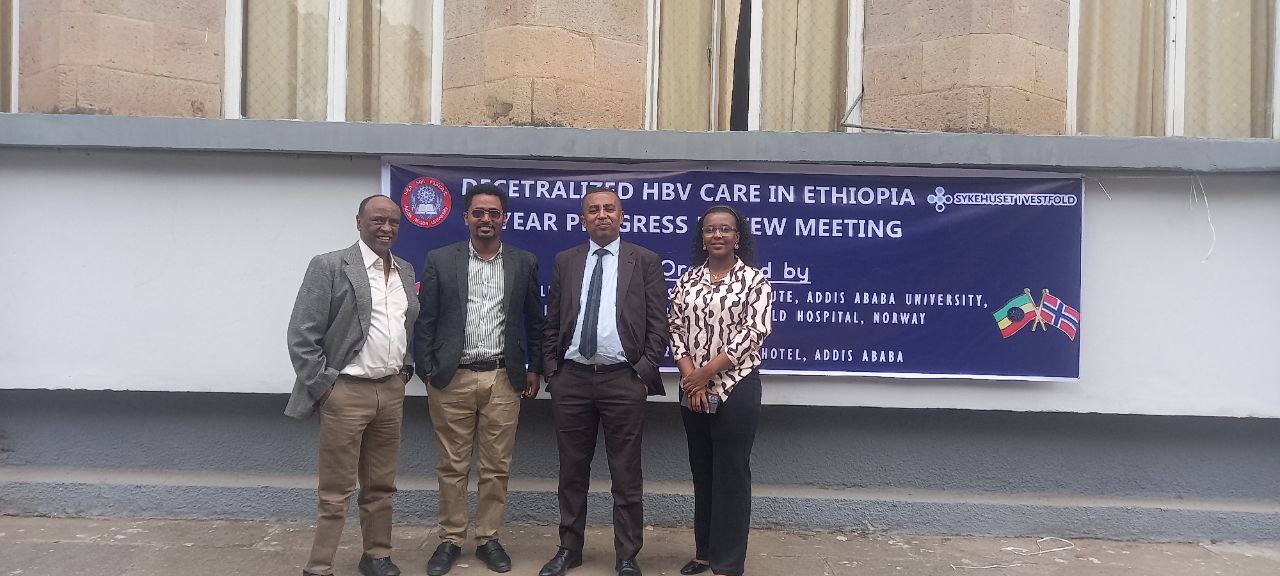
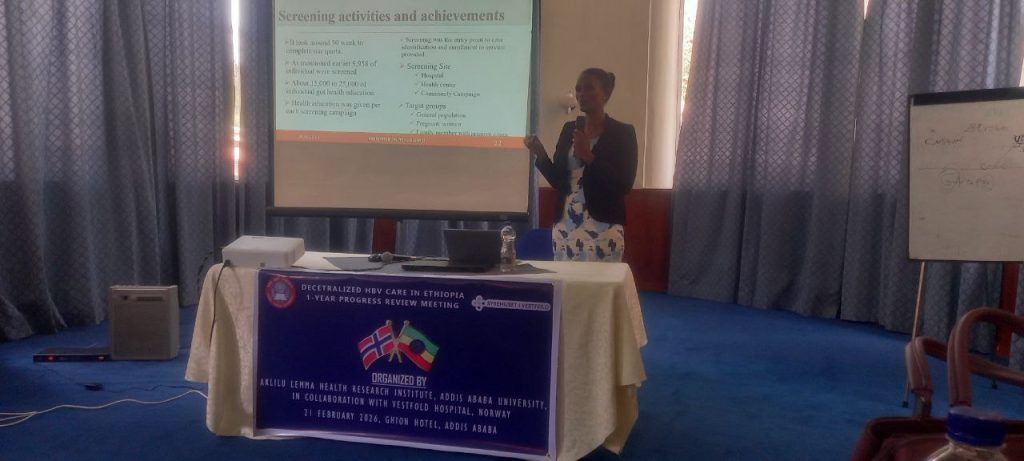
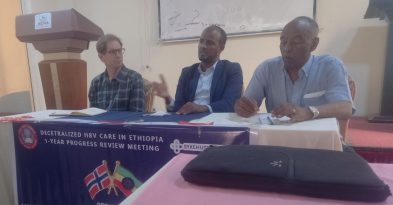
Ethiopia’s health sector is looking to intensify its fight against chronic hepatitis B (CHB) through decentralized care. The decentralized CHB care was started in Ethiopia in 2024 at six health facilities of the Oromia and Somali Regional Governments by the EtNoHep group. On 21 February 2026, a review meeting brought together various stakeholders from the Ministry of Health (MOH), Oromia Regional Health Bureau (ORHB), hospitals in Batu, Mojo, Adama, and Sabata, alongside the EtNoHep project team. The gathering marked one year of decentralized CHB care implementation, offering a candid look at achievements, obstacles, and future directions.
Representation and Collaboration
The meeting drew a diverse group of participants: national and regional program directors and experts, hospital CEOs and medical directors, focal persons, data managers, and project staff. This broad representation reflected the collaborative spirit needed to tackle hepatitis B, a disease that remains a silent but serious public health challenge in Ethiopia. Stakeholders emphasized that decentralization has brought services closer to communities. However, keeping patients in a sustaining patient retention in care and changing awareness of the community about the disease requires coordinated action across institutions.
Core challenges for follow-up care:
Focusing on the inhibitors of follow-up, the participants identified three core thematic areas that influence it: i) Communication channel gaps, ii) HBV awareness gap, and iii) Service inaccessibility and financial constraints.
1. Communication channel gaps
The participants noted that one of the main problems concerning lost to follow-up is the difficulty of reminding a patient about their follow-up. Some of the contact numbers the patients provided were not functional. Some are not theirs but relatives’ or neighbors’ contact numbers that, when called, are difficult to communicate with the patient. Sometimes the patients gave wrong numbers that are not related to them. The network is also another challenge in communicating with them.
“… Wrong phone register during screening and enrollment, and switched mobile phones are common,” Hospital 1.
As a solution, the meeting has noted to update the contact numbers every time the patients come to follow-up clinics. In addition to that, having a contact number of an influential family member was also mentioned as a possible solution.
“ .. “We ask for a new contact number or update the contact number every time patients come to our clinic.” Hospital 2, “… having a contact number of an influential family member communicating with him/her, helps to decide the fate of a patient on follow-up,” Hospital 1.
The participants also underlined that appropriate utilization of the Calendar Book, having a dedicated tracer, or having a regular schedule for tracing helps in improving the follow-up rate. The tracers should not be fed-up with calling the patients again and again. If they do not respond with one call, it is good to call the next day or later on.
“To have a good retention in FU care, use appointment calendar, lost tracing register, and phone calls extensively.” Hospital 2.
It was also noted that, in addition to a reminder phone call, sending an SMS at least once week before the scheduled follow-up helps patients make the necessary arrangements to attend.
2. HBV awareness gap
According to the participants, awareness and attitude of the patients towards hepatitis B virus affects their engagement in follow-up care. Some patients even forget their appointment schedule. They perceive the disease as simple which does not hurt much, and tend to forget the care. Therefore, the hepatitis B clinic need to remind them about their follow-up.
“… some patients tend to forget their appointment schedule, so appropriate utilization of the Callander book is mandatory,” Hospital 3
As the nature of CHB is asymptomatic in many cases, people think that they are healthy and do not want to keep in the follow -up schedule. The patients hesitated to continue the medical treatment and went to traditional healers. Others also seek spiritual healing, and they frequently self-withdraw from the program. However, some patients come back with complicated manifestations of the disease after taking traditional herbal medicine. Therefore, patients need to understand the real nature of the disease, as it hurts silently and starts to show signs and symptoms at a later stage. Health education on every follow-up visits was emphasized
“Patients frequently withdraw from the program due to spiritual or traditional beliefs,” Hospital 4. “… traditional healers need to be communicated with, and at least they should know what they are doing to patients,” Hospital 3.
It was noted that health education should be provided in locally understandable language and that this should be addressed through mainstream media, social media, religious institutions, schools, and with distribution of education materials like brochures. Everyone should be aware of the true nature of the disease.
Among the health care professionals, the stigma seems to be very high. They wrongly perceived the route of transmission and the treatability of the disease. When their colleague is diagnosed with HBV, they tend to discriminate him or her. Health care workers diagnosed with the disease also show high self-stigma. This created stressful follow-up attendance, particularly for health professional patients.
“… health professional patients come to the clinic hiding themselves from others, for example, we attend to them during lunchtime,” Hospital 4.
As a solution, the participants proposed that health care workers be trained about the routes of transmission, how to prevent it, treatment options available, and not to panic when they get diagnosed with HBV themselves or when their friend gets diagnosed.
3. Service inaccessibility and financial constraints
Participants also noted that patients often reported being unable to attend because they were occupied with other competing responsibilities. In some cases, mothers who had recently given birth expressed difficulty in coming to the facility. In other cases, farmers and daily laborers expressed their reason for coming for follow-up due to other duties that do not allow spare time.
“… sometimes we face the fact that mothers who have recently given birth could not attend the follow-up. In such cases, we send their medication with their partners,” Hospital 3.
As a solution, it was proposed that, in difficult cases, if the patient could not attend the follow-up schedule, it would be better to send the medication with family member and encourage them to come for the next follow-up.. Having a flexible appointment schedule is also suggested to help patients who cannot make it according to the proposed appointment schedules.
The other challenge noted was a financial problem. People who are coming from a far places need to pay expensive transportation fee, which was the reason for some who miss their follow-ups.
“When we call to remind the follow-up, some of the patients raise the issue of transportation fee, and sometimes we pay out of our pocket,” Hospital 1.
As a solution, it was noted that arranging follow-up care at a closer health facility may solve this challenge.
Summary recommendations
1. Strengthen Communication Channels
-
- Motivate Hep-B clinic team and administrative support by (EtNoHep/Hospital managers)
-
- Update patient contact numbers at every clinic visit by implementers (clinic team)
-
- Collect contact details of influential family members by implementers (clinic team)
-
- Use appointment calendars, tracing registers, and dedicated tracers by implementers (clinic team)
-
- Ensure persistence in follow-up calls (call again if no response) by implementers (clinic team)
-
- Send SMS reminders at least one week before scheduled appointments by implementers (clinic team)
2. Improve HBV Awareness and Reduce Stigma
-
- Provide health education in a locally understandable language by implementers (clinic team), MOH/RHB.
-
- Disseminate information through mainstream media, social media, schools, religious institutions, and brochures by MOH/RHB.
-
- Train health care workers on HBV transmission, prevention, and treatment options by MOH/ORHB in collaboration with EtNoHep
-
- Address stigma and self-stigma among health professionals by MOH/RHB.
-
- Engage traditional healers to improve patient retention by MOH/RHB.
3. Enhance Service Accessibility and Address Financial Barriers
-
- Offer flexible appointment schedules to accommodate patients’ responsibilities by the implementers (clinic team)
-
- Allow family members or partners to collect medication when patients cannot attend – by the implementers (clinic team)
-
- Decentralize services by arranging follow-up care at closer health facilities by implementers (clinic team)- MOH/RHB
-
- Explore support mechanisms (e.g., covering transport fees, community support) by hospitals/EtNoHep/by implementers (clinic team)

Leave a Reply